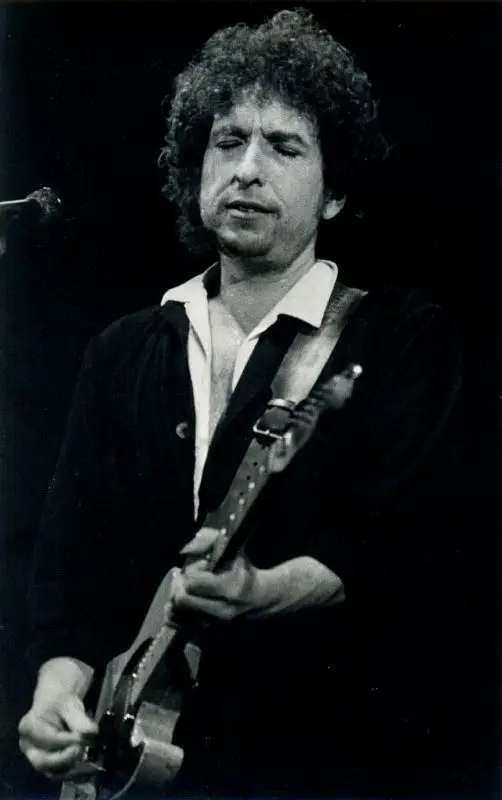
Bob Dylan, explored

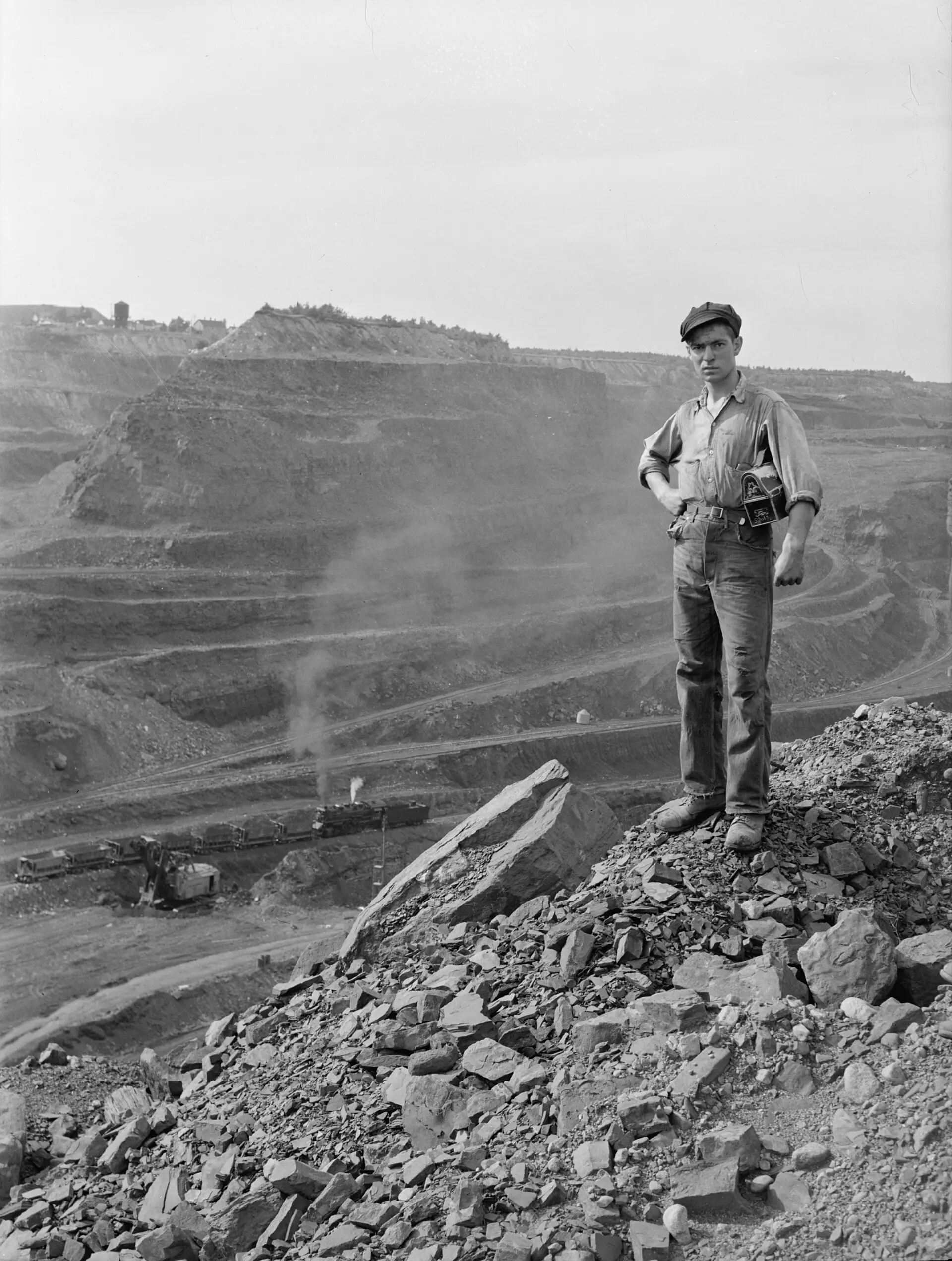
Hull-Rust-Mahoning open-pit iron mine, Hibbing, August 1941
Hull-Rust-Mahoning open-pit iron mine, Hibbing, August 1941 · John Vachon · Public domain

1941–1960

Duluth and Hibbing

Robert Allen Zimmerman was born in Duluth and grew up in the iron-mining town of Hibbing, Minnesota, where he played rock and roll in high-school bands. At the University of Minnesota in Minneapolis he found folk music and Woody Guthrie and began calling himself Bob Dylan.

  1. 1941Born in Duluth, Minnesota
  2. 1947Family moves to Hibbing
  3. 1959Graduates from Hibbing High School
  4. 1959University of Minnesota and Dinkytown

Swipe for Greenwich Village →Scroll or press → for Greenwich Village

The story

What happened

He was born in Duluth in 1941, the elder son of Abram and Beatty Zimmerman. When he was six the family moved inland to Hibbing, a mining town on the Mesabi Iron Range, where his father worked in the family's furniture and appliance store. He grew up in a close Jewish household, formed teenage bands, and in 1959 left for the University of Minnesota. In the Dinkytown student neighborhood he spent more time in coffeehouses than in class, and there he took a new name.

The music

No records survive from these years, but the listening that shaped everything later began here. Late at night he tuned in distant radio stations playing country, blues and early rock and roll, and he idolized Little Richard, pounding the piano with his high-school bands. In Minneapolis he swapped the piano for an acoustic guitar and harmonica, learning old ballads and blues from records and from other players, and above all absorbing the songs and the plain-spoken manner of Woody Guthrie.

What it led to

Guthrie became a fixation. Dylan learned his songs, imitated his voice and read his life story, and when he heard that his hero was seriously ill in a hospital near New York, the Midwest stopped being big enough. He left the university without finishing, played his way east, and reached New York in the winter of 1961. He arrived with a guitar, a borrowed manner and a head full of old songs, and the city's folk scene was ready for someone like him.

Read onWikipedia: Bob Dylan, early life ↗Hibbing, Minnesota ↗
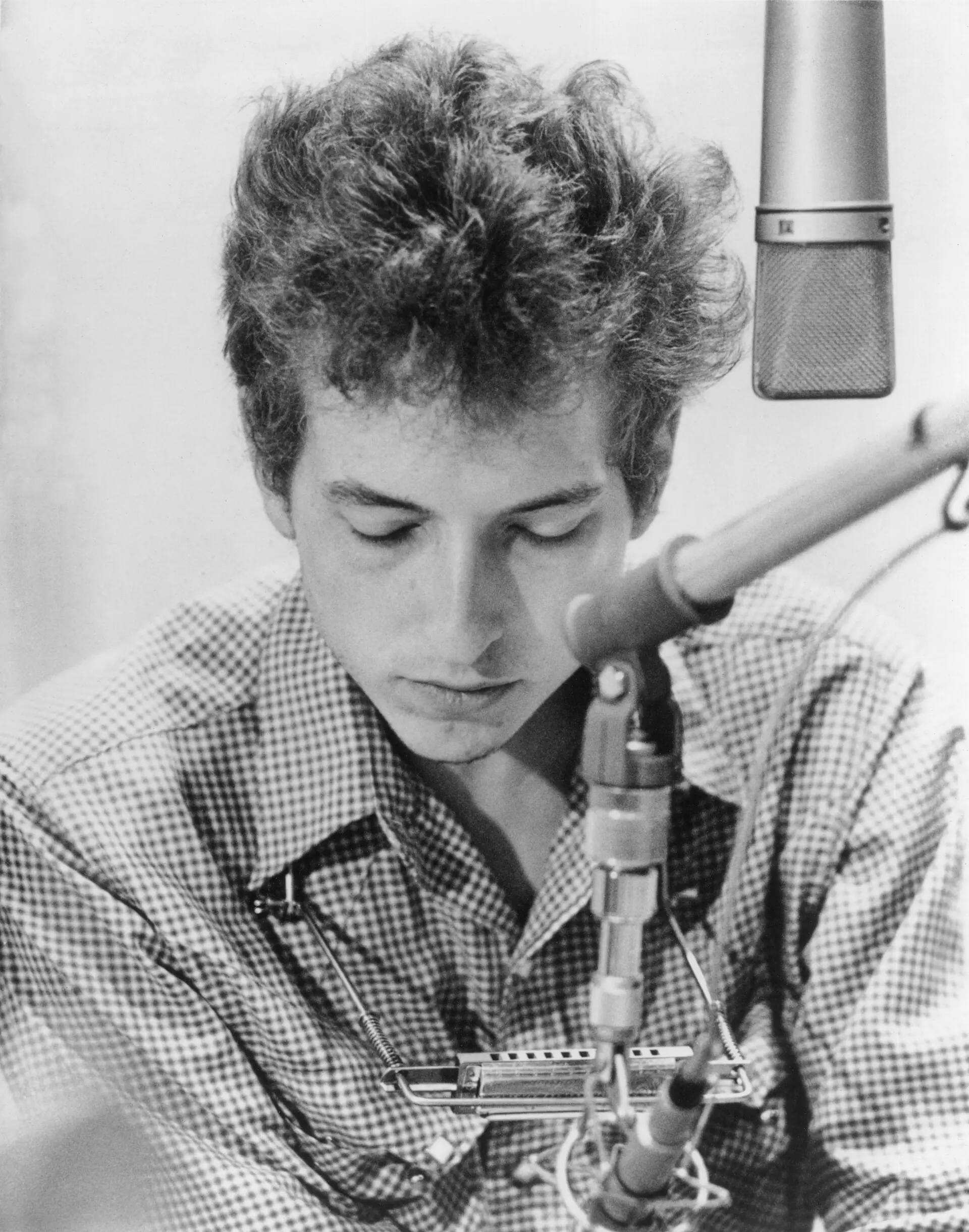
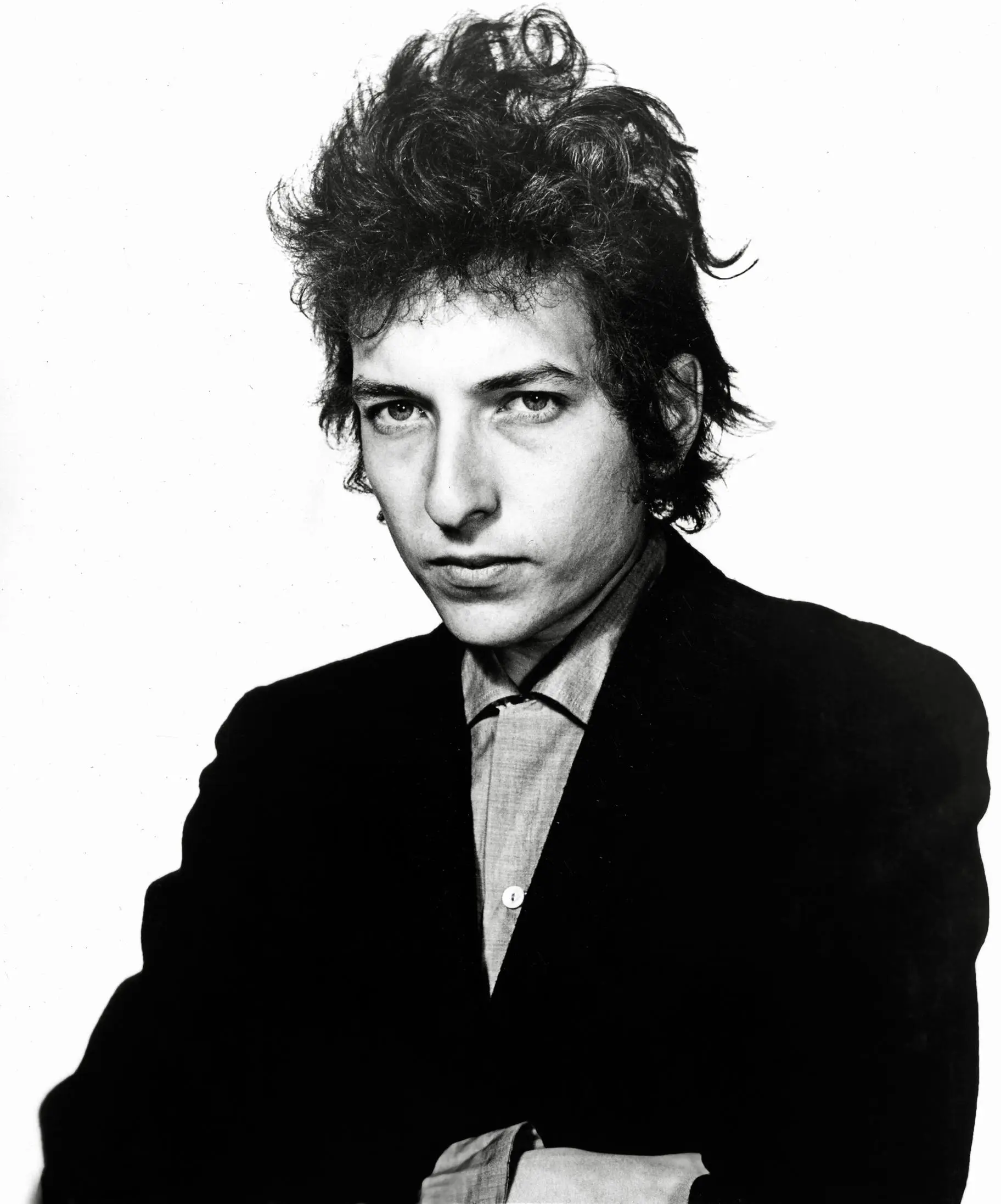
Studio portrait by Don Hunstein for The Times They Are a-Changin', c. 1963
Studio portrait by Don Hunstein for The Times They Are a-Changin', c. 1963 · Don Hunstein · Public domain

1961–1964

Greenwich Village

Arriving in New York in the winter of 1961, Dylan worked the coffeehouses of Greenwich Village and within a year was signed to Columbia Records. His topical songs made him the voice of the folk revival and the civil-rights movement, until he began turning inward on Another Side.

  1. 1961Arrives in New York and visits Woody Guthrie
  2. 1961New York Times review and Columbia contract
  3. 1963Newport Folk Festival 1963
  4. 1963March on Washington

Swipe for Going Electric →Scroll or press → for Going Electric

The story

What happened

He made his first visits to Woody Guthrie in a New Jersey hospital and played wherever he could in the Village, from basket houses to Gerde's Folk City. A warm review by Robert Shelton in the New York Times helped bring a contract with Columbia, signed by the producer John Hammond. Over the next two years his songs were taken up by others and by the civil-rights movement; he sang at the Newport Folk Festival with Joan Baez and at the March on Washington in 1963.

The music

The debut album was mostly traditional blues and folk songs with just two originals, sung with young bravado. The Freewheelin' Bob Dylan, built around songs like "Blowin' in the Wind" and "A Hard Rain's a-Gonna Fall," showed a writer of startling reach. The Times They Are a-Changin' was starker and more topical. Another Side of Bob Dylan, cut in a single night in 1964, set the protest aside for personal songs, jokes and love. Throughout, it was only his voice, guitar and harmonica.

What it led to

By 1964 he was uncomfortable being treated as a spokesman, and his writing was moving toward longer, stranger songs built on images rather than headlines. He was also listening closely to the Beatles and the new British bands and seeing what a group could do. The next step was to plug in. His following album put a rock band behind half of its songs, and within months the acoustic folk singer of the Village was gone for good.

Songs to start with

Threads through it

Read onWikipedia: Bob Dylan, 1960–1962 ↗Greenwich Village ↗

1965 publicity photo by Daniel Kramer
1965 publicity photo by Daniel Kramer · Daniel Kramer · Public domain

1965–1966

Going Electric

In 1965 Dylan traded solo acoustic folk for a rock band, recording three albums in about fifteen months and scoring hit singles with songs of a new, surreal kind. Folk purists booed him at Newport and on his 1966 world tour with the Hawks, but the music reshaped what rock lyrics could be.

  1. 1965Solo tour of England, filmed for Dont Look Back
  2. 1965Newport Folk Festival: plays electric
  3. 1965Marries Sara Lownds
  4. 1966"Judas!" at the Manchester Free Trade Hall

Swipe for Basement and Country →Scroll or press → for Basement and Country

The story

What happened

Bringing It All Back Home came out in the spring of 1965, just before a solo acoustic tour of England that D. A. Pennebaker filmed for Dont Look Back. That July at Newport he played a short, loud set backed by members of the Paul Butterfield Blues Band, and part of the crowd booed. Late in the year he married Sara Lownds. He then toured the world with the Hawks, meeting hostile audiences night after night; in Manchester in 1966 one listener shouted Judas at him.

The music

The sound changed faster than at any other point in his career. Bringing It All Back Home split its time between a rough electric band and solo acoustic songs. "Like a Rolling Stone," six minutes long and built on Al Kooper's organ, became a hit single, and Highway 61 Revisited, with Mike Bloomfield's guitar, carried the same wild energy across a whole album. Blonde on Blonde, a double album made mostly in Nashville, was looser and more shimmering, full of long, dreamlike songs.

What it led to

The pace was impossible to keep up. The 1966 tour, with its booing crowds and punishing schedule, left him exhausted, and more concerts were planned. Then, in the summer of 1966, he crashed his motorcycle near his home in Woodstock, New York. The accident gave him a reason to stop. He cancelled the road, withdrew from public view and stayed home with his young family, and for more than a year almost nothing new was heard from him.

Songs to start with

Threads through it

Read onWikipedia: Bob Dylan, 1965–1969 ↗Electric Dylan controversy ↗

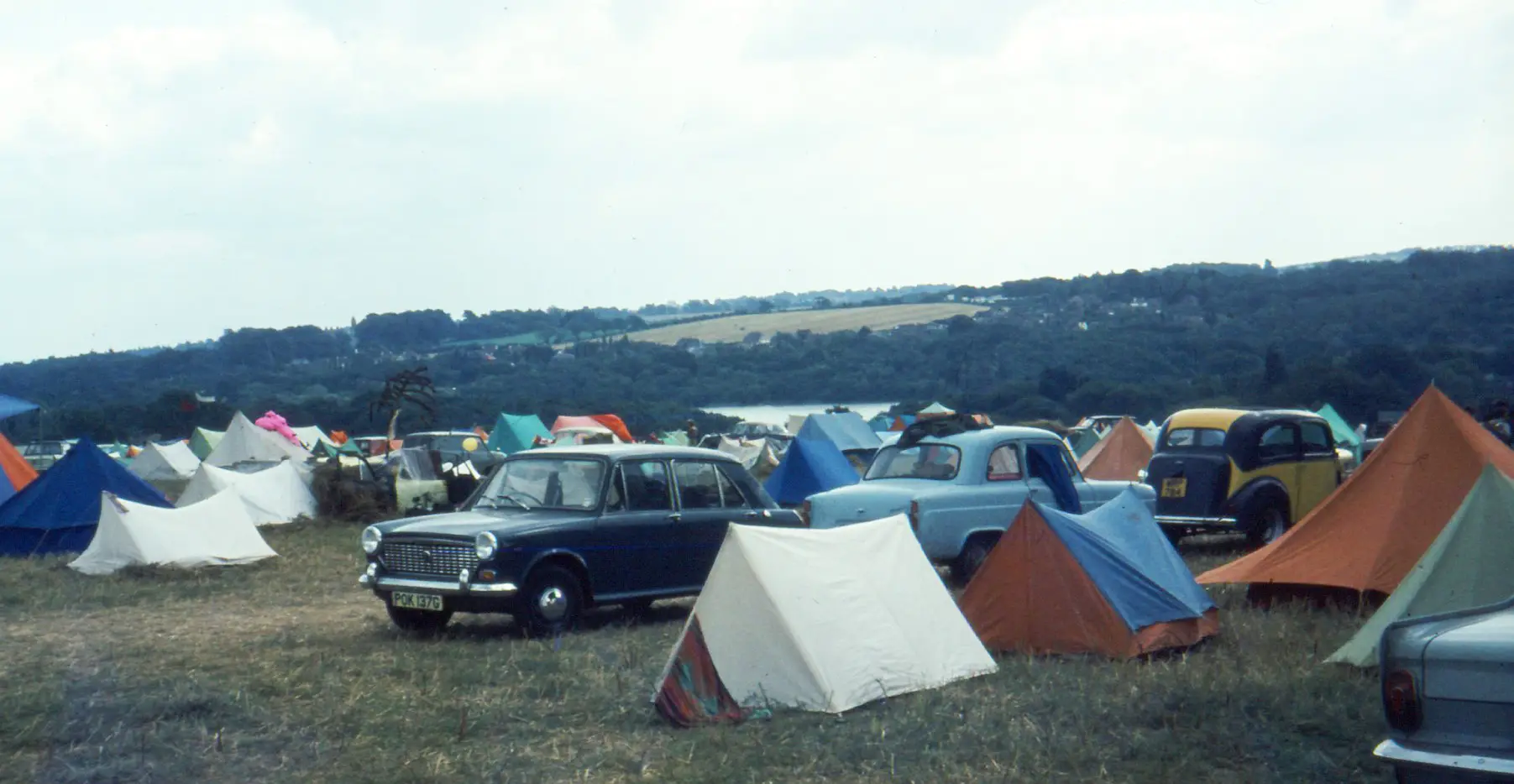
Campsite at the Isle of Wight Festival, August 1969
Campsite at the Isle of Wight Festival, August 1969 · TimBrighton · CC BY 2.0

1967–1970

Basement and Country

After his 1966 motorcycle accident Dylan stopped touring, settled with his family near Woodstock and recorded informally with the Band in a basement. He re-emerged with quiet, country-tinged records made in Nashville, trading the electric storm of the mid-sixties for plain songs about love, home and old America.

  1. 1966Motorcycle accident near Woodstock
  2. 1967Woodstock: basement sessions with the Hawks
  3. 1969Isle of Wight Festival
  4. 1970Honorary doctorate from Princeton

Swipe for Blood on the Tracks →Scroll or press → for Blood on the Tracks

The story

What happened

He spent his recovery out of sight in Woodstock, raising a growing family and turning down the role of rock star. In 1967 the Hawks moved nearby, and in the basement of a pink house in West Saugerties they recorded dozens of songs for fun. His only major concert of these years was at the Isle of Wight Festival in 1969, with the Band. In 1970 Princeton gave him an honorary doctorate, a ceremony he found uncomfortable and later turned into a song.

The music

The basement recordings were loose, funny and haunted, mixing old folk songs with new ones, and they spread on bootlegs long before any official release. John Wesley Harding, cut in Nashville with just bass and drums, was spare and parable-like. Nashville Skyline went further into country, with a smooth new voice and a duet with Johnny Cash. Self Portrait, a puzzling double album of covers and odds and ends, was widely panned, and New Morning followed within months, warmer and more confident.

What it led to

The early seventies were quiet. He released little new music, moved his family back to New York for a time and seemed content to stay out of the spotlight. Gradually he edged back: a role and a soundtrack in a Sam Peckinpah western, a brief move away from Columbia, and plans to go back on the road with the Band, the same musicians who had stood beside him through the booing of 1966. A new, more open chapter was about to begin.

Songs to start with

Threads through it

Read onWikipedia: Bob Dylan, 1965–1969 ↗The Basement Tapes ↗

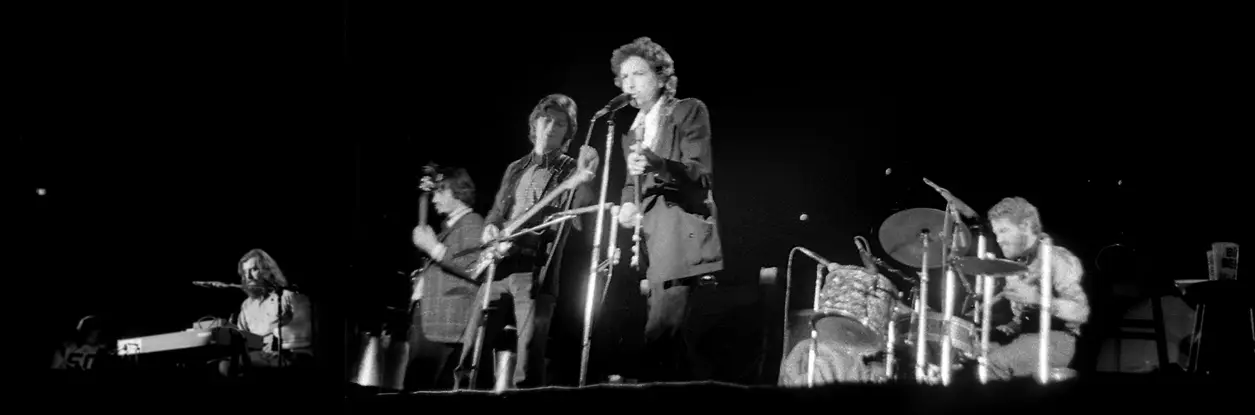
With The Band on the 1974 tour, 2 February 1974
With The Band on the 1974 tour, 2 February 1974 · Hugh Shirley Candyside · CC BY-SA 2.0

1973–1978

Blood on the Tracks

After scoring a western and touring arenas again with the Band, Dylan made Blood on the Tracks in 1974 as his marriage was coming apart, and it became one of his most admired records. He then took a loose troupe of musicians on the road as the Rolling Thunder Revue and closed the decade with a big-band world tour.

  1. 1973Acts in Pat Garrett and Billy the Kid
  2. 1974Back on the road with the Band
  3. 1975The Rolling Thunder Revue
  4. 19781978 world tour

Swipe for Gospel →Scroll or press → for Gospel

The story

What happened

In Mexico in 1972 and 1973 he acted in Sam Peckinpah's Pat Garrett and Billy the Kid and wrote its score. In 1974 he returned to the road with the Band for an arena tour that drew enormous demand. His marriage, meanwhile, was falling apart, and he and Sara divorced in 1977. In between came the Rolling Thunder Revue of 1975 and 1976, a roving caravan of friends playing smaller halls, and in 1978 a long tour of Japan, Australia, Europe and America.

The music

The soundtrack gave him "Knockin' on Heaven's Door". Planet Waves was made quickly with the Band, and Columbia released the outtakes album Dylan without his blessing. Blood on the Tracks, recorded in New York and partly redone in Minneapolis, was intimate and mostly acoustic. The Basement Tapes finally appeared officially in 1975. Desire, much of it written with Jacques Levy, was coloured by Scarlet Rivera's violin and Emmylou Harris's harmonies. Street-Legal brought horns and a chorus of backing singers.

What it led to

By the end of the 1978 tour he had been through a divorce, a sprawling film of his own, Renaldo and Clara, that few liked, and years of nearly nonstop movement. Late that year, by his own account, he had a religious experience and became a born-again Christian, joining Bible classes in California. The songs he began writing came out of that faith, and his next album, recorded in Muscle Shoals, Alabama, would surprise almost everyone who had followed him.

Songs to start with

Threads through it

Read onWikipedia: Bob Dylan, 1970–1979 ↗Rolling Thunder Revue ↗

Gospel tour, Massey Hall, Toronto, 18 April 1980
Gospel tour, Massey Hall, Toronto, 18 April 1980 · Jean-Luc Ourlin · CC BY-SA 2.0

1979–1981

Gospel

After a born-again Christian conversion in the late 1970s, Dylan made three albums of faith-centred songs and for a time played only that new material in concert. The period won him a Grammy and also alienated many fans who wanted the old songs.

  1. 1979Saturday Night Live: three gospel songs
  2. 1979Gospel-only shows at the Warfield
  3. 1980Grammy for Gotta Serve Somebody
  4. 1980Older songs return to the set

Swipe for The '80s →Scroll or press → for The '80s

The story

What happened

His conversion became public in 1979. That autumn he appeared on Saturday Night Live and played three songs from his new album, and in November he opened a run of shows at the Warfield Theatre in San Francisco that included none of his older songs, with sermons between numbers. Many listeners walked out or stayed away. In 1980 he won a Grammy for "Gotta Serve Somebody," and by the end of that year the old songs had begun to return to his concerts.

The music

Slow Train Coming, produced by Jerry Wexler and Barry Beckett in Muscle Shoals with Mark Knopfler on guitar, was the best-sounding record he had made in years, tight and soulful. Saved went deeper into gospel, with a band and a chorus of backing singers in full voice. Shot of Love, in 1981, was rougher and more varied, mixing faith songs with earthier rock and roll, and it ended with "Every Grain of Sand," often counted among the finest songs he has written.

What it led to

By 1981 his shows mixed the gospel songs with old favourites, and the preaching had faded from the stage. He never publicly renounced his faith, but his songs stopped announcing it so directly. When he returned to the studio in 1983 it was with Mark Knopfler as producer, and the album that resulted, Infidels, was full of worldly, political and personal songs. The gospel period closed, leaving three records that are still argued over and, more lately, increasingly admired.

Songs to start with

Threads through it

Read onWikipedia: Bob Dylan, 1970–1979 ↗

On stage at the Mini Estadi, Barcelona, 1984
On stage at the Mini Estadi, Barcelona, 1984 · Xavier Badosa · CC BY 2.0

1983–1990

The '80s

After the gospel albums Dylan returned to secular songs with Infidels, then spent the middle of the decade chasing contemporary production with mixed results. A late-decade turn, from the Traveling Wilburys and the start of constant touring to Daniel Lanois's Oh Mercy, restored his footing.

  1. 1985Live Aid: closes the Philadelphia show
  2. 1988Inducted into the Rock and Roll Hall of Fame
  3. 1988The Never Ending Tour begins
  4. 1988The Traveling Wilburys

Swipe for Back to the Roots →Scroll or press → for Back to the Roots

The story

What happened

These were restless years. In 1985 he closed the Live Aid concert in Philadelphia with Keith Richards and Ronnie Wood, and a passing remark about American farmers helped spark Farm Aid. He toured with Tom Petty and the Heartbreakers and then with the Grateful Dead. In 1988 Bruce Springsteen inducted him into the Rock and Roll Hall of Fame, he formed the Traveling Wilburys with George Harrison, Jeff Lynne, Roy Orbison and Tom Petty, and he began the long road he never really left.

The music

Infidels, with Knopfler and the rhythm section of Sly Dunbar and Robbie Shakespeare, was polished and strong. After it he chased the sound of the radio: Empire Burlesque was dressed in glossy mid-eighties production, Knocked Out Loaded was patchy but included the long "Brownsville Girl," written with Sam Shepard, and Down in the Groove was mostly covers. Oh Mercy, made in New Orleans with Daniel Lanois, was dark and atmospheric and widely hailed. Under the Red Sky, produced by Don and David Was, was lighter.

What it led to

Under the Red Sky was coolly received, and after it the new songs dried up. Dylan kept touring year round with a small band, often playing over a hundred shows a year, but for most of the 1990s he released no new songs of his own. Instead he went back to the beginning, to the old folk ballads and country blues he had learned in Minneapolis and the Village, and began recording them on his own at home, just a guitar, a harmonica and his voice.

Songs to start with

Threads through it

Read onWikipedia: Bob Dylan, 1980–1989 ↗Traveling Wilburys ↗

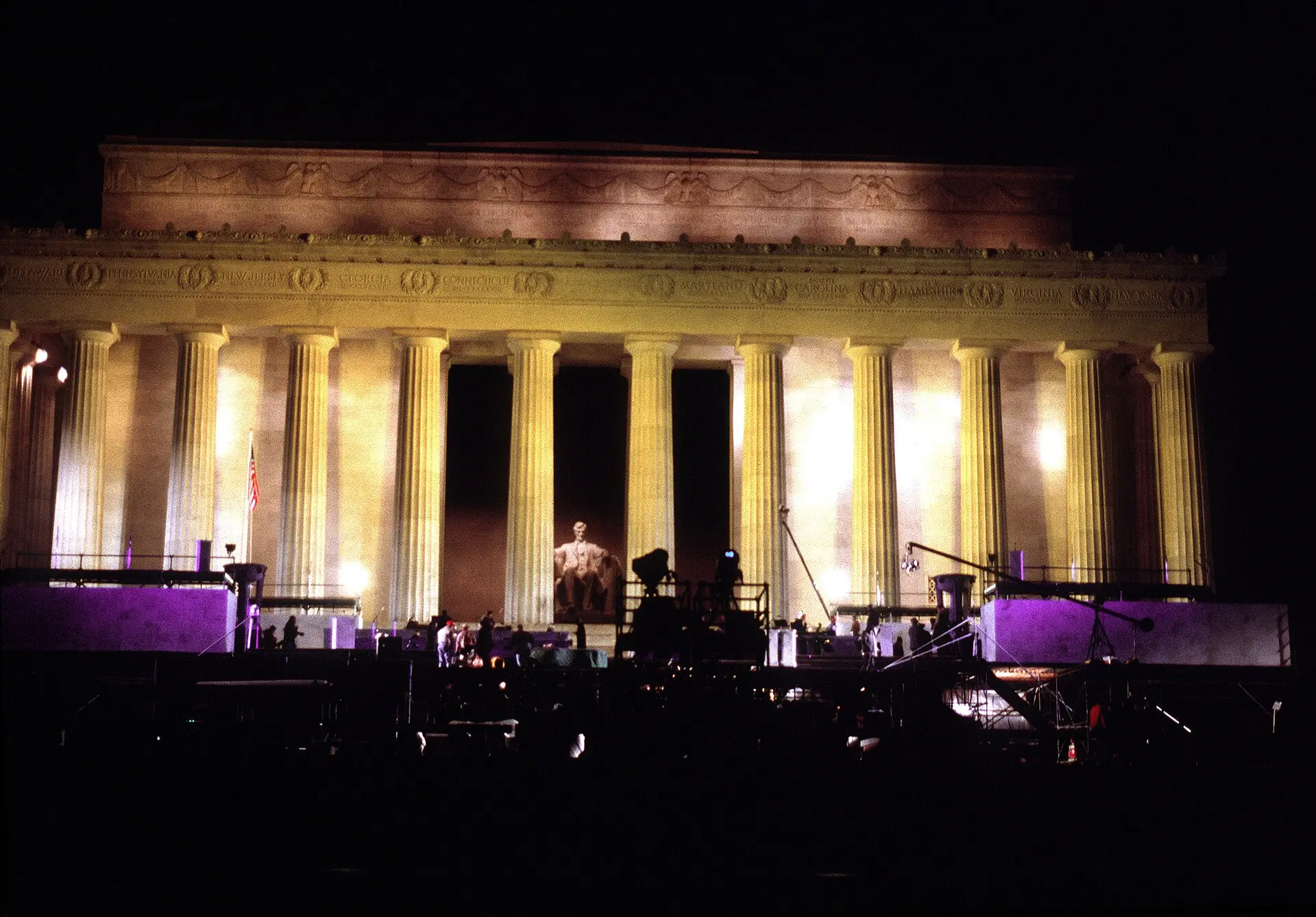
The Lincoln Memorial stage for the pre-inaugural concert of 17 January 1993, where Dylan sang "Chimes of Freedom"
The Lincoln Memorial stage for the pre-inaugural concert of 17 January 1993, where Dylan sang "Chimes of Freedom" · U.S. Department of Defense (American Forces Information Service) · Public domain

1992–1993

Back to the Roots

With no new songs of his own, Dylan made two solo acoustic albums of old folk and blues material, the first since 1964 with just his guitar and harmonica. The records reconnected him with the songs he had learned as a young man and pointed toward his later work.

  1. 199230th anniversary concert at Madison Square Garden
  2. 1993Sings at the Clinton inaugural celebration

Swipe for Late Renaissance →Scroll or press → for Late Renaissance

The story

What happened

He kept touring, and the industry began to look back at his career. In 1992 Columbia staged a thirtieth-anniversary concert at Madison Square Garden, where Neil Young, Stevie Wonder, Eddie Vedder, George Harrison and many others played his songs before he took the stage himself. In January 1993 he sang "Chimes of Freedom" at the celebration in Washington for Bill Clinton's inauguration. Through it all he was writing very little and spending much of his time on the road.

The music

Good as I Been to You, recorded in his garage studio in Malibu, was a set of traditional songs and old ballads played solo on acoustic guitar and harmonica, his first album like that since 1964. World Gone Wrong, the next year, was darker and starker still, made up of murder ballads, blues and laments, and came with his own idiosyncratic notes on each song. It won a Grammy for traditional folk. The voice was worn, but the performances were intimate and unhurried.

What it led to

These records sent him back to the deep well of old American song, and that well would feed everything he wrote afterward. In 1994 he played an MTV Unplugged show. Then he began writing again, and early in 1997 he went back into the studio with Daniel Lanois, carrying a new set of songs about age, love and mortality. Those songs became Time Out of Mind, released that autumn after a serious illness had put him in hospital, and the start of a remarkable late flowering.

Songs to start with

Threads through it

Read onWikipedia: Bob Dylan, 1990–1999 ↗

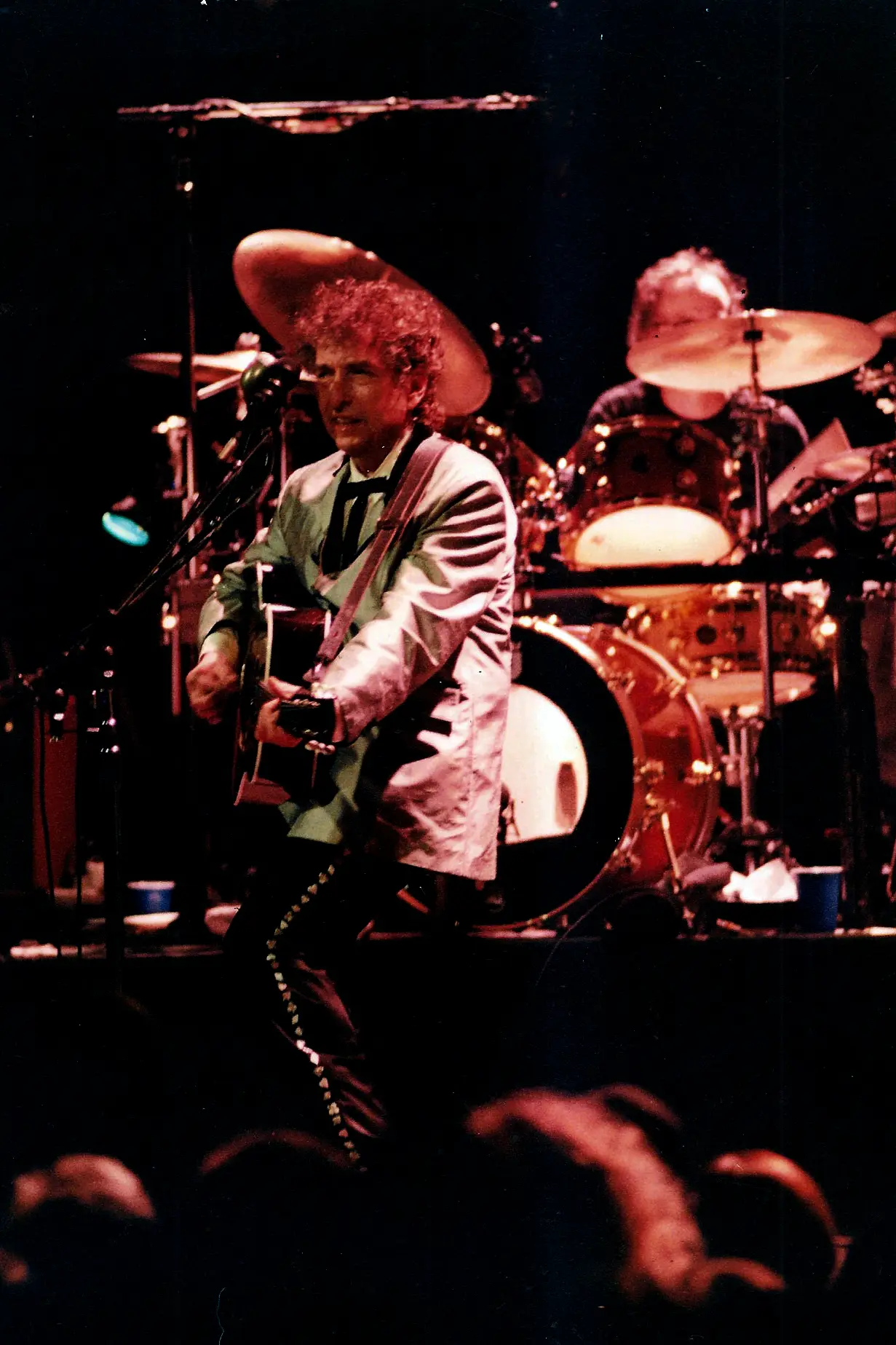
On stage at Opinião, Porto Alegre, April 1998
On stage at Opinião, Porto Alegre, April 1998 · Gabriel Pozzobom · Public domain

1997–2012

Late Renaissance

With Time Out of Mind in 1997, Dylan returned to new songwriting and won the Grammy for Album of the Year, starting a long late-career revival. Touring constantly, he made a string of acclaimed records steeped in old American blues and ballads, and added an Oscar and a bestselling memoir.

  1. 1998Album of the Year Grammy for Time Out of Mind
  2. 2001Academy Award for Things Have Changed
  3. 2004Chronicles: Volume One published
  4. 2012Presidential Medal of Freedom

Swipe for The Standards →Scroll or press → for The Standards

The story

What happened

The years after Time Out of Mind brought honours he had never sought: the Album of the Year Grammy, an Oscar and a Golden Globe for "Things Have Changed" from the film Wonder Boys, a special Pulitzer citation and, in 2012, the Presidential Medal of Freedom. Chronicles: Volume One, a vivid, unconventional memoir, appeared in 2004, and Martin Scorsese's No Direction Home followed. He hosted Theme Time Radio Hour on satellite radio, and he never stopped touring the world.

The music

Time Out of Mind, produced by Daniel Lanois, was murky and brooding, full of songs about time running out. "Love and Theft" and Modern Times were made with his road band and produced by Dylan himself, under the name Jack Frost, playing jump blues, swing, rockabilly and old ballads with relish. Together Through Life leaned on David Hidalgo's accordion and Tex-Mex textures, Christmas in the Heart gave its earnings to charity, and Tempest closed the run with long, dark story songs.

What it led to

After Tempest the new songs paused once more. On stage his voice had grown deep and rough, yet he had become fascinated by the craft of singing itself and by the popular songs of his parents' generation. Rather than write, he began recording with his touring band the ballads that Frank Sinatra had once made famous. The result, Shadows in the Night, would open a new and quite unexpected chapter: Bob Dylan as a singer of the Great American Songbook.

Songs to start with

Threads through it

Read onWikipedia: Bob Dylan, 2000–2009 ↗2016 Nobel Prize in Literature ↗

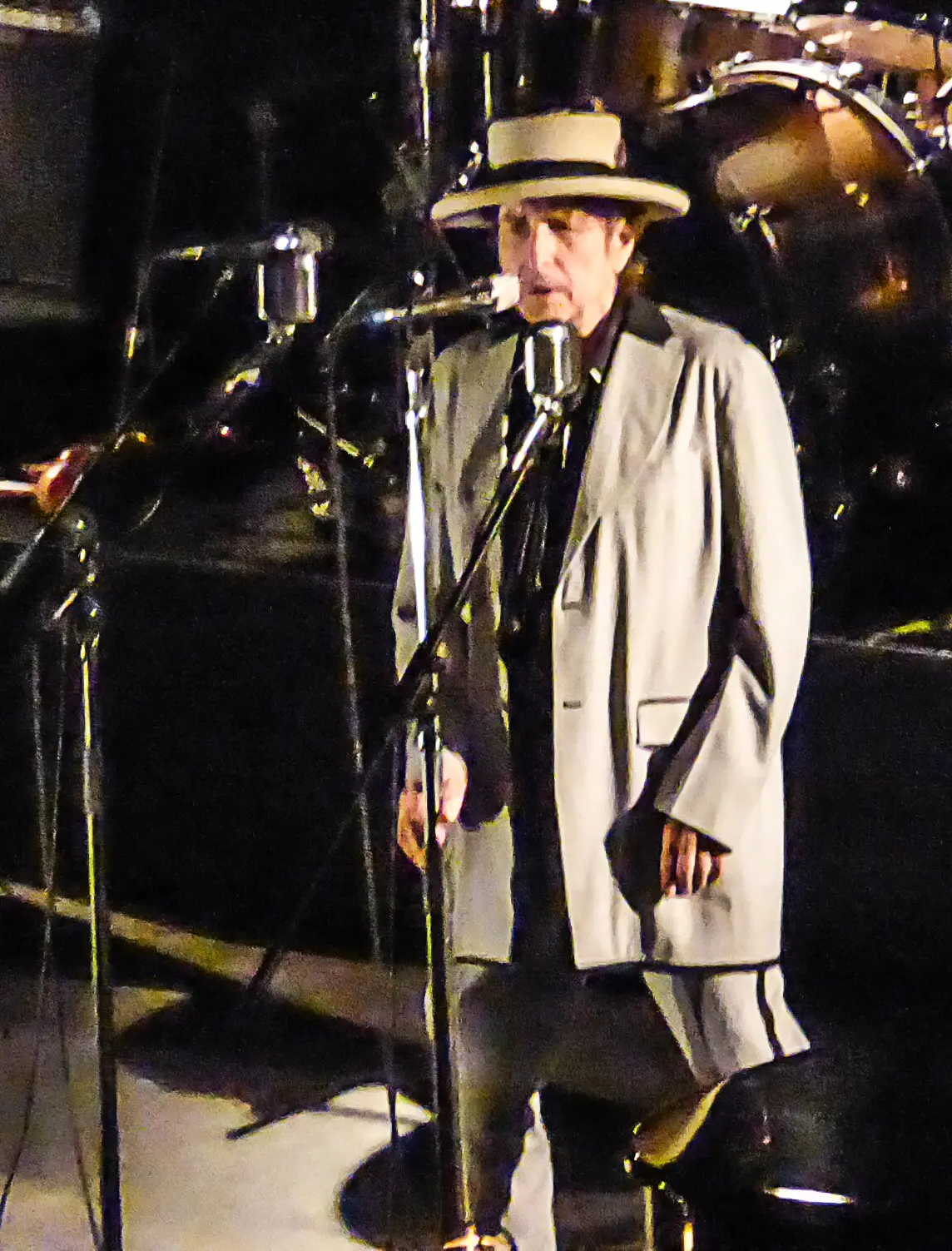
On stage, 6 July 2015
On stage, 6 July 2015 · Carlos Ramón Bonilla · CC BY-SA 3.0

2015–2017

The Standards

Dylan turned to the Great American Songbook, recording three albums of songs Frank Sinatra had sung, arranged for his touring band. In the middle of it he became the first songwriter awarded the Nobel Prize in Literature.

  1. 2015MusiCares Person of the Year
  2. 2016Nobel Prize in Literature
  3. 2017Nobel lecture

Swipe for Rough and Rowdy →Scroll or press → for Rough and Rowdy

The story

What happened

In 2015 he was named MusiCares Person of the Year and gave a long, frank speech about his influences and his critics. In October 2016 the Swedish Academy awarded him the Nobel Prize in Literature. He stayed silent for weeks, did not attend the ceremony in Stockholm, where Patti Smith sang one of his songs in his place, and the following year delivered a recorded lecture about the songs and books that had formed him, including Moby-Dick, All Quiet on the Western Front and the Odyssey.

The music

Shadows in the Night, recorded at Capitol Studios in Hollywood, set Sinatra's ballads for his small touring band, with a pedal steel guitar standing in for the orchestra. It was played largely live, with few overdubs, and his voice, gentler than on stage, carried the melodies with real care. Fallen Angels followed in 2016 in the same spirit, a little lighter, and Triplicate in 2017 stretched the project across three discs, thirty songs in all, with more brass and swing.

What it led to

The standards years changed how people heard him as a singer, and his concerts began to mix these old ballads with his own songs. Then came a long quiet in the studio. Few knew he was writing again until March 2020, when, with much of the world shut in by the pandemic, he released without warning a seventeen-minute song about the Kennedy assassination. It was his first new original song in eight years, and an album soon followed.

Songs to start with

Read onWikipedia: Bob Dylan, 2010–2019 ↗

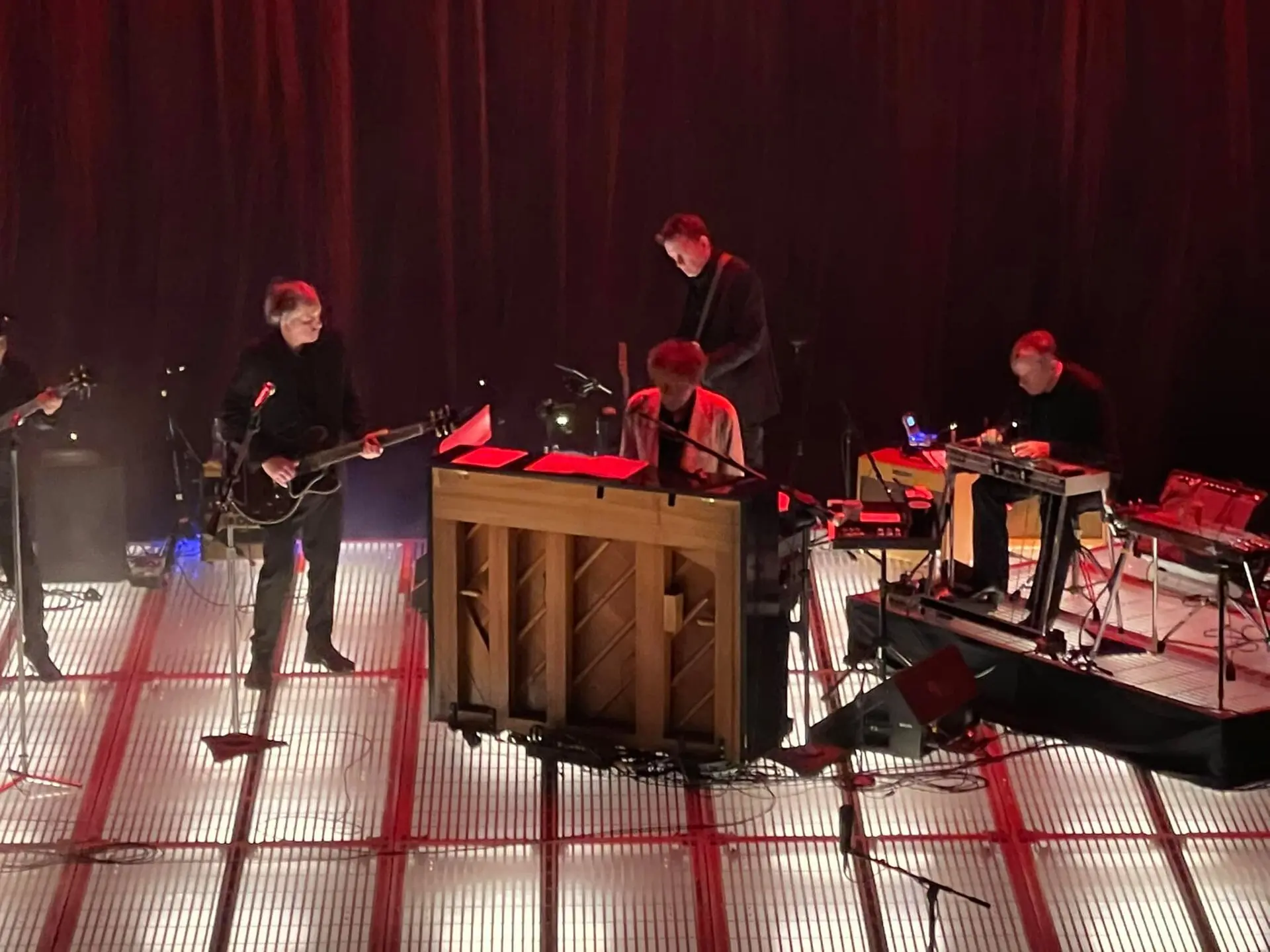
Opening night of the Rough and Rowdy Ways tour, Milwaukee, 2 November 2021
Opening night of the Rough and Rowdy Ways tour, Milwaukee, 2 November 2021 · Hwn2013 · CC BY-SA 4.0

2020–

Rough and Rowdy

In 2020 he returned with his first original songs in eight years, starting with the Kennedy epic "Murder Most Foul" and the album Rough and Rowdy Ways. He has since sold his song catalog, streamed a reimagined concert film and published a book about other people's songs.

  1. 2020"Murder Most Foul" released
  2. 2020Song catalog sold
  3. 2021Shadow Kingdom stream
  4. 2022The Philosophy of Modern Song

The end of the line, for now.The end of the line, for now.

The story

What happened

The surprise release of "Murder Most Foul" in March 2020 was followed in June by Rough and Rowdy Ways, which drew some of the best reviews of his career. Late that year he sold his songwriting catalog to Universal Music Publishing Group. In 2021 he streamed Shadow Kingdom, a concert film staged in a smoky, invented club, and in 2022 published The Philosophy of Modern Song. The Bob Dylan Center opened in Tulsa, and he returned to touring, playing mostly the new songs.

The music

Rough and Rowdy Ways is slow, patient and grave. Much of it is low-lit blues and hushed ballads, with his voice close and conversational, and the songs are crowded with references to history, literature and old music. The long Kennedy song fills a disc of its own. Shadow Kingdom took the opposite approach to the past, reimagining older songs, many from the sixties, as quiet, acoustic, almost chamber-like arrangements, and it later came out as an album of its own.

What it led to

The story of this era is still being written. In his eighties he keeps touring, building sets around his newest songs rather than his most famous ones. The center in Tulsa has made his archive available to researchers, and a 2024 biopic about his arrival in New York, A Complete Unknown, brought his early years to a new generation. Whatever comes next, he has spent more than sixty years refusing to stand still, and shows no sign of stopping.

Songs to start with

Threads through it

Read onWikipedia: Bob Dylan, 2020–present ↗